Latest News
On 13 June 2026, our group took part in the Science Picnic of Polish Radio and the Copernicus Science Centre in Warsaw, co-organizing the stand of the Faculty of Biology. This year’s event gathered many visitors interested in exploring science through hands-on activities, demonstrations, and direct conversations with researchers.
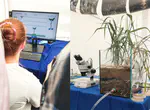
At our stand, the miniature model of a constructed wetland helped us explain how microorganisms support natural water purification and ecosystem functioning. We also presented agar plates with colorful bacterial cultures, including strains with unusual features that helped us tell stories about microbial diversity and adaptation. One of the highlights was Serratia marcescens, a true queen of science outreach. These examples opened the way to conversations about bacteria living in lakes and other freshwater ecosystems, their role in nutrient cycling, and their importance as indicators of environmental change.
The event was a great opportunity to share topics related to our research projects, including the role of microorganisms in urban water reservoirs, the spread of antibiotic resistance in the environment, and the use of microbial communities in nature-based solutions. We also showed how bacteria and fungi can be useful in agriculture, environmental management, and industry, especially food production. Visitors could test their knowledge in a quiz about microorganisms involved in producing different foods and learn which microbial properties make these processes possible.
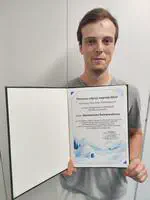
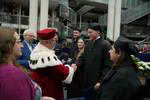
Last Saturday, Karol Ciuchciński took the formal doctoral oath during a graduation ceremony at the University of Warsaw Library. This ceremony marked the official conclusion of his doctoral journey, following his excellent PhD defense in October.
Karol’s dissertation, entitled “From ecological insights to sustainable enzyme discovery and biotechnological innovations – computational analysis of (meta)genomic data from extreme environments”, concluded an ambitious research project carried out in record time. Congratulations, Karol! We wish you every success in your scientific career!
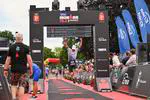
On 7 June 2026, Dr. Przemysław Decewicz completed the 1/2 Ironman race in Warsaw. Przemek swam 1.9 km, cycled 90 km, and ran 21.1 km, finishing with an outstanding time of 4:36:02.
Huge congratulations on this amazing achievement!
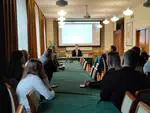
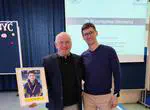
Recently, Przemek visited his former primary school - SP5 in Wyszkow, where he was invited as an alumnus to meet with students and share his career path. During the meeting, Przemek talked about how he became a scientist, what everyday research work looks like, and what kind of projects are currently being carried out by our team.
The visit was also a return to a very special place - the school where he trained competitive swimming as a member of UKS “Polonez” Wyszkow for nearly eight years. Przemek emphasized that this sports background still plays an important role in his scientific work. Determination, regular training, patience, and the ability to deal with failures are essential not only in sport, but also in science. In this sense, experiments may resemble training sessions, while scientific publications and grant applications can feel like important competitions that require long-term preparation.
It was a great opportunity to show students that the path to science can begin in many different places - including a swimming pool.
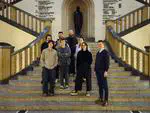
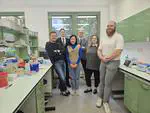
In February 2026, we had the pleasure of hosting Sara Ribeirinho Soares (PhD student) from the Faculty of Engineering of the University of Porto.
Sara’s research focuses on understanding how operational conditions in conventional activated sludge (CAS) wastewater treatment systems shape microbial community dynamics and the dissemination of antibiotic resistance. Working with lab-scale reactors operating continuously, like within a full-scale wastewater treatment plant, fed with real wastewater, she investigates the impact of sludge retention time (SRT) and temperature on bacterial community structure, as well as on the abundance and dynamics of antibiotic resistance genes (ARGs) and mobile genetic elements (MGEs) by combining physicochemical monitoring with molecular and bioinformatics approaches.
During her stay, Sara took training in DNA sequencing techniques, bioinformatics, and metagenomic data analysis. It was nice to host Sara in our group, and we hope to see her soon!
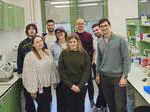
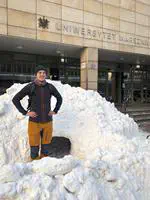
This winter, our student - Stanislaw Swiezewski, built an igloo in front of the faculty building, bringing a lot of joy to both students and staff. The unusual winter construction quickly attracted attention, including from the media.
For our team, it became a great opportunity to share the results of our research on bacteria from polar regions and to bring the microbial world of extreme environments closer to a wider audience.